
Fintech Speaker & Presenter — Daniela Sozzi, DNYC Ltd
Daniela Sozzi is a fintech speaker and thought leader delivering board-level presentations on payments strategy, M&A, AI governance, and regulatory transformation across the UK and EU. Named to the Innovate Finance Women in Fintech Powerlist in 2024 and 2025, she is available for conference keynotes, panel moderation, and executive briefings.
Expert Presentations
Daniela Sozzi is a frequent contributor to premier financial forums
- Boardroom briefings at the intersection of operational resilience and corporate finance in the fintech sector.
- Actionable frameworks for companies and private equity investors.
- Industry fireside chats
- Strategic workshops
- Thematic presentations
Speaking Engagements
in-person or remote speaking opportunities
- Investor forums
- Panel discussions
- Panel moderation
- Thematic webinars
- Keynote address
topics covered
Payments & Regulation
UK National Payments Strategy
EU digital payments sovereignty
Corporate Finance
M&A transaction advisory
Post-merger integration best practices
Technology
AI governance frameworks
Blockchain strategy for fintech boards
Regulatory Strategy
EMI licensing
MiCAR compliance
Investment scouting
Navigating fintech investment opportunities
Transformation
Leveraging tech innovation
Operational resilience for regulated entities
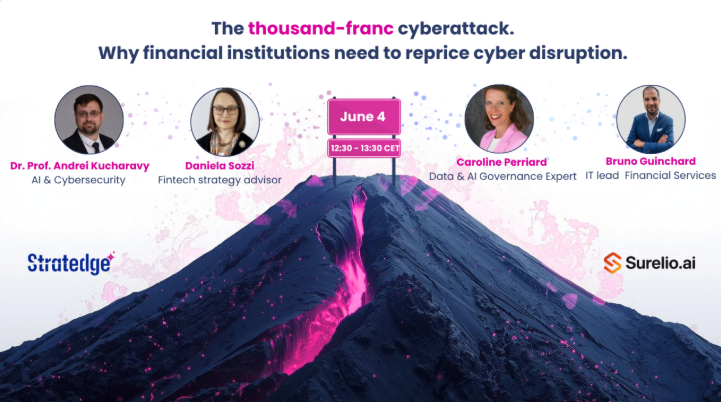
Webinar – Stratedge, Surelio
Why financial institutions need to reprice cyber disruption
- Date: 4 June 2026
- Time: 12:30–13:30 CET
- Format: 60 minutes · live Q&A
Speakers:
Andrei Kucharavy, founder of Surelio and professor in machine learning and software security.
Daniela Sozzi, founder of DNYC and strategy advisor working closely with the fintech ecosystem.
Caroline Perriard, co-founder of Stratedge and AI governance consultant.
Bruno Guinchard, former UBS director and expert in IT quality assurance, testing, compliance, and AI governance.
Hosted by: StratEdge and Surelio.ai
What Attendees And Organisers Say
Webinar – GLG Insights
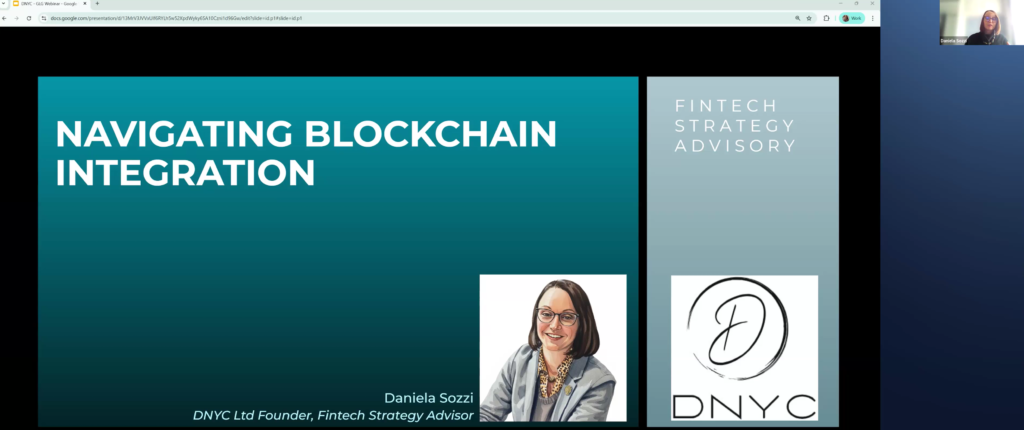
Blockchain Integration in Fintech
A practical framework for where blockchain creates genuine value for corporate payments clients — cutting through ideology to execution.
Watch the full webinar recording.
What Attendees And Organisers Say
Sample Presentation For Institutional Investors
Presented to a select group of institutional investors from leading private equity firms and hedge funds actively deploying capital in emerging markets. Covers valuation frameworks, infrastructure gaps, and where returns actually materialise.
Fintech Investment in Emerging Markets
The Infrastructure Gap as Investment Opportunity: Why developed-market frameworks fail in emerging fintech ecosystems — and what to use instead
Where Returns in Fintech Actually Materialise: Payments capture volume; remittances, lending, and insurance capture ROI
Why Banks and Fintechs Collaborate, Not Compete: The dominant partnership model — and what it means for your investment thesis
The Next Wave: Where Smart Money Is Going: Marketplaces, modular open platforms, and enabling technologies
Due Diligence Framework: Identifying Winners: A three-layer framework for separating signal from noise in fintech due diligence
Valuation Frameworks for Emerging Market Fintech: Why context dominates methodology — and how to build defensible valuations
I started by challenging a core assumption. In developed markets, payments infrastructure evolved over decades through banks and card schemes—essentially consortiums of international banks issuing cards to creditworthy individuals. This bank-centric model works when you have high banking penetration and established credit histories.
When I asked the group where they thought the biggest opportunity was, most said payments. They’re half right. The largest addressable market is indeed in B2C and B2B payments—that’s where the volume is. But the highest ROI? That’s in remittances, lending, and insurance products.
One investor asked whether banks would crush these fintech upstarts once they got serious about digital. My answer surprised them: collaboration, not competition, is the dominant model.
I shared my thesis on where the market is heading over the next five to ten years. Three trends deserve capital allocation:
Marketplaces for financial services
Modular open platforms
Enabling technologies that unlock everything else
This is where the conversation got tactical. I walked them through my three-layer framework for due diligence.
The most common question was about valuation methodologies. My answer disappointed some of them: there is no standard approach because context dominates.