Fintech Strategy & Board Advisory
Founded in London in 2018, operating across Europe

Led by Daniela Sozzi, Award-Winning Fintech Strategy Advisor


WHAT DOES DNYC DO?
DNYC Ltd is a London-based fintech strategy advisory founded by Daniela Sozzi in 2018.
DNYC advises boards and investors on post-merger integration, crisis remediation, regulatory licensing and AI governance, resolving complex inflection points with board-ready and executable plans.
Navigating Strategic Inflection Points for Fintech & Payment Boards
DNYC Ltd is a boutique strategy consultancy. It combines deep payments and fintech domain expertise with hands-on board-level advisory impact across strategy, corporate governance, and innovation.
Daniela brings 20 years of industry-specific experience delivering value creation, transformation strategy and operating model design for leading payments and fintech players across Europe and the UK.
DNYC addresses fintech strategic challenges
- Complex fintech strategy and prioritisation sprints.
- Post-merger integration dragging and destroying value
- Challenging dynamics at board-level between management, investors and independent directors
- Regulatory requirements threatening your business model
- Digital transformation stalling despite heavy investment
- Liaising with local regulators.
- Board-level gaps in payments and fintech strategy
Transforming Fintech Strategy with Board-Level Expertise That Delivers
A seasoned fintech strategy consultant and board advisor with deep payments expertise.
Daniela steps in to architect and execute solutions that work.
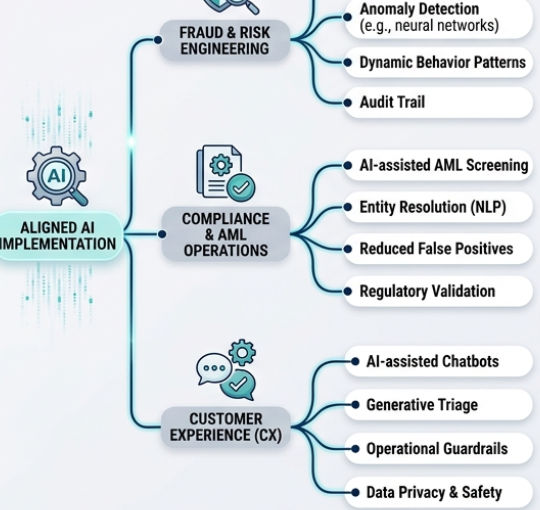
Strong experience in AI solutions, digital payment and stablecoins platforms.
No cookie-cutter frameworks: just bespoke strategies crafted with your team, driven by custom KPIs, and designed to deliver tangible results in months.
Who is Daniela Sozzi?
Daniela Sozzi is a fintech strategist and founder of DNYC Ltd, a London-based advisory she established in 2018.
With over two decades in financial services in the UK and European Union, she has advised boards, investors, and C-level executives on payments, M&A, post-merger integration, licensing, and AI governance.
Why WORK WITH a specialist boutique for fintech strategy?
Fintech strategy is not merely a consulting exercise; it is an operating discipline at the intersection of capital, regulation, and technology. Generalist firms observe from the outside. A specialist boutique brings pattern recognition from inside the transformational decisions: M&A, post-merger integration, licensing, and regulatory remediation. When the stakes are existential, boards need accountability, not another slide deck.













5-star Ratings For DNYC Ltd and Daniela Sozzi
Solid Board Contributor
Daniela operates confidently at board level, where her opinions are highly respected across the industry. Her ability to balance strategic vision with practical execution is exceptional: she delivers high-level advisory services and takes ownership of complex assignments requiring precision and depth.
Senior Compliance Consultant
Nets
Regulatory Knowledge with Strategic Guidance
I’ve had the pleasure of working with Daniela in the fintech space, and I can confidently say she is a true professional. Her expertise in MiCA and VASP regulations is exceptional, and she combines deep regulatory knowledge with a solid understanding of real world business needs.
Beyond regulatory expertise, Daniela provides strong strategic guidance that helps shape and refine the overall direction of the company.
Highly recommended to any organization looking for a knowledgeable, strategic, and reliable professional with a finance background.
CFO
Digital Assets & Fintech
Stakeholder Alignment
Daniela takes the time to hear from all stakeholders (i.e. management, Board, legal counsel) and tailors action plans that enable organisations to achieve strategic objectives and scale effectively. Her regulatory expertise and industry connections are invaluable.
Cryptoassets Compliance Advisor
Multiple engagements
References available on request. See Daniela Sozzi’s Linkedin page for further info.
DNYC Ltd is rated 4/5 stars on Trustpilot.
Latest news – Digital Euro Executive Readiness Series
Joint Strategic Insights from DNYC Ltd & LI Advisory Studio
20 August 2026
The Digital Euro is not a passive IT migration or compliance exercise—it is a structural, market-shaping transformation across European financial services.
In a joint four-part executive series, Daniela Sozzi (Fintech Strategy Advisor, DNYC) and Lucia Italiano (Transformation Governance Advisor, LI Advisory Studio) examine how boardrooms across the UK, DACH, and the EU must move from passive regulatory awareness to strategic execution.
The milestones that matter most in the next twelve months (i.e. provider selection, infrastructure notifications, standards finalization) are procedural and near-term, not legislative and distant. Missing the window to investigate them isn’t a 2029 risk. It’s a 2026 risk.
Every engagement is led by Daniela Sozzi directly, drawing on 20 years of hands-on experience in finance and 8 years of DNYC Ltd’s successful track record.
Daniela has been inside the transformational decisions in this industry: operating model overhauls, board-level governance redesigns, blockchain and AI strategy, and implementation of strict governance frameworks.
Pivoting from siloed compliance checklists to an integrated, architecture-led governance model. Fintech boardrooms are facing a profound shift in priorities. The era of “growth at all costs” has completely transitioned into an era of stringent capital efficiency, operational resilience, and heavy regulatory accountability.
“Daniela Sozzi knows the unspoken rules of the fintech space, because she has lived through the most transformative events in the industry.”
PE Operating Partner